Originally published in the Ocean City Sentinel
by Richard Crawford
If you spend any time in Ocean City, New Jersey, you’ll hear about the boardwalk, the family-friendly beaches, and the fudge. But dig just a little deeper, and you’ll find one of the most passionate, tight-knit surf communities on the East Coast—a crew that lives for the ocean all year long, even if the prime surf season only lasts a few months.
In fact, Surfer Magazine named Ocean City the 4th best surf town in America in 2017—and it wasn’t just for the waves. The honor came because of the people: a multi-generational surf scene built on mentorship, community spirit, and a deep respect for the ocean.
At the center of this community are the beaches in the vicinity of 6th and 7th Streets—the old Wonderland Pier. This wasn’t always the case. In the 1960s, the 14th Street Pier was the center of Ocean City’s surfing universe, then came the 9th Street jetty, then Waverly and several other locations.
Then there is Don Pileggi, a longtime Ocean City resident, who was inducted into the East Coast Surfing Hall of Fame in Long Branch, NJ, on June 1, 2025. In the words of the East Coast Hall of Fame, Don Pileggi is the “best of New Jersey’s surf legacy and commitment to the East Coast surf story, a spirit that connects us all.”
Don Pileggi established the Ocean City Surf Association in 1964. In 1970, he fought hard to get Ocean City its first and only surf beach at 7th Street. Before that, surfers were allowed to surf only when lifeguards weren’t on duty.
The sense of community is part of what Don left behind. It was even bigger than the smile he always seemed to have on his face. Without his presence in Ocean City, playgrounds wouldn’t be the same; without him we might not know the fever of street hockey or soccer leagues. Don was also hugely instrumental in promoting surfing contests.
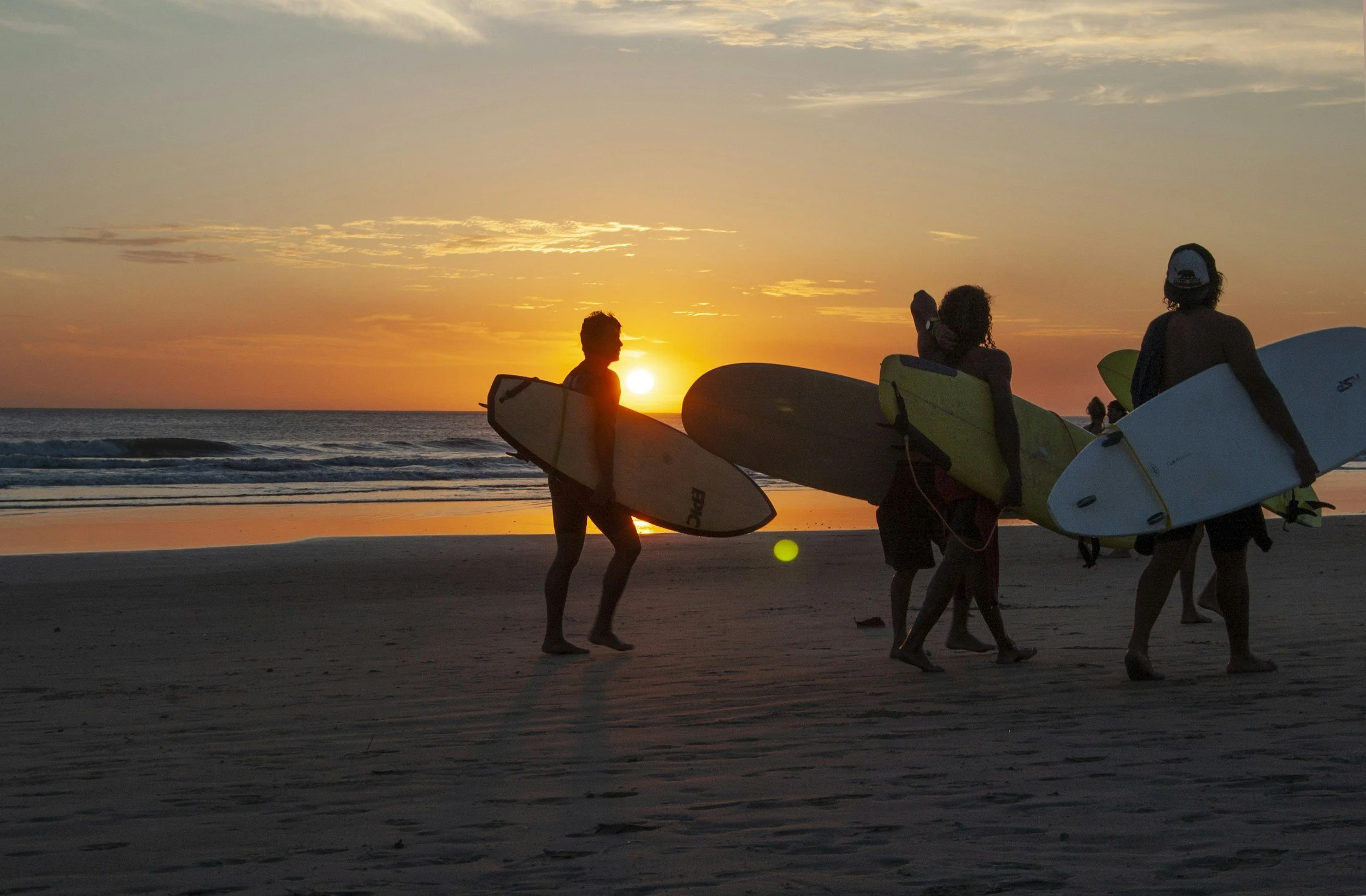
To most, the current 5th, 6th, 7th & 8th Street Beaches are just another sandy stretch. But for local surfers, they’re currently the hub for catching tasty waves and surfing instruction—sacred grounds. Generations have learned to ride waves here, arriving before work or after school, to take advantage of diminished winds, and to chase calming sunrise or sunset swells. This community also gathers regularly for “board meetings” beneath the 7th Street camera, where all manner of global problems are casually solved—at least in theory. The bonds are tight, they are real, and they endure all sorts of hardship.
Many find the ocean a refuge from life's harsh realities—addiction, PTSD, anxiety. Time spent on the water, among friends, fosters recovery, pushing back the darkness and cravings. It's a place where people feel safe, supported, and understood.
But even this does not capture everything that the surf community means to people:
For others, it represents genuine healing. Many find the ocean a refuge from life's harsh realities—addiction, PTSD, anxiety. Time spent on the water, among friends, fosters recovery, pushing back the darkness and cravings. It's a place where people feel safe, supported, and understood.
These beaches around 7th Street are a local monument where surfing continues to thrive. You’ll see little groms catching their first rides and older locals who’ve been here since the days of single fins and no leashes. One name that comes up a lot: Rob Kelly. A legendary figure in Ocean City surf history, Rob is known not just for his style in the water but for the way he builds community on land. His legacy is part of what gives the local surf culture its unique blend of laid-back cool and deep loyalty. Rob's father Jim, who was recently elected to city council, can be seen surfing gracefully, often daily at sunrise and sunset!
That same spirit runs through the next generation, too. Under the guidance of coaches like Nate Garza, the Ocean City High School Surf Team just won the 2026 NSSA Northeast Regional Championship, bringing home the prestigious Joe Keenan Trophy—commonly considered the New Jersey state surfing championship. It was the 26th regional championship in Ocean City school history.
And the surf community extends far beyond the waves. Local surf shops—7th Street Surf Shop, Heritage Surf & Sport, and Surfers Supplies—are more than businesses. They're woven into the fabric of the community, intimately understanding the unique needs of local surfers, who in turn repay them with intense loyalty. It's no surprise that an outsider brand like Ron Jon failed within a year; authenticity here runs deep.
The surf community is more than the eye sees. It’s a living, breathing part of Ocean City today—but it’s fragile in its own way.
Surfers often talk about “Shadows On The Sand,” a phrase used to describe when tall structures, like high-rise hotels, block the natural sunlight that defines the beach experience. It’s a metaphor that acts as a reminder that something has been lost. Another towering high-rise hotel/condo on the boardwalk between 6th & 7th Streets wouldn’t just cast a physical shadow; it would cast a cultural one. It would drastically overcrowd an already packed beach. There would be a shift and loss of energy at a location that has long been defined by barefoot kids, salty conversations, and longtime locals catching fish and waves before they start their day.
These surf beaches are already the narrowest in town. Icona says that a new hotel would bring 1,000 new guests every three days, fundamentally changing the nature of these already overcrowded beaches. Even just 500 hotel guests pouring onto that tight stretch of sand would be enough to squeeze the surfers out. Parking in this 7th Street area is already severely strained. When a surf break becomes just another amenity in a resort brochure, something essential gets lost—the space, the vibe, the soul of it.
Surfers often talk about “Shadows On The Sand,” a phrase used to describe when tall structures, like high-rise hotels, block the natural sunlight that defines the beach experience. It’s a metaphor that acts as a reminder that something has been lost.
Some have waved off concerns. They say the development won’t affect the surf community—that “no one messes with the surfers.” But that reassurance ignores a century-long tradition of developers doing exactly that.
Cape St. Francis, the iconic right-hand point break immortalized in the final scene of The Endless Summer, was ruined just a few years after filming by harbor construction and coastal development. In California, Killer Dana disappeared beneath a man-made harbor, and access to Trestles has repeatedly come under threat. In Hawaii, breaks like Ma‘alaea—home to one of the fastest waves in the world—have suffered from runoff and shoreline hardening.
And here’s the thing: surfers aren’t typically political. They don’t form PACs or hire lobbyists. They’re more likely to paddle out than speak out, which makes it easy for decisions to be made without them.
But that silence shouldn’t be mistaken for indifference. When development threatens surf conditions—open sand, lines of sight, unobstructed water access—the damage is often permanent.
The local surf crowd isn’t interested in valet service or rooftop lounges. They want a clear view of the horizon. They want public access and open sand—not private umbrellas and infinity pools. They WANT the sun in their eyes at sunset, making it harder to read the waves! Ocean City’s surf scene thrives on its simplicity: on the ability to show up with nothing but a board and find something real.
Surfing in Ocean City, NJ, is a tradition. A shared history, a quiet, timeless ritual passed down through generations. It’s a place of healing. It’s about chasing a wave—but more than that, it’s about holding onto the kind of place where waves still matter.
One question experienced surfers often ask beginning surfers is, “Are you having fun?” If the answer is “YES,” the veteran waverider will respond, “that’s all that matters.”
To quote an old OC surf expression, it’s time we all “Wake Up & Slam!”
