Ocean City’s Boardwalk Boon Is Within Arms Reach
by Ocean City 2050
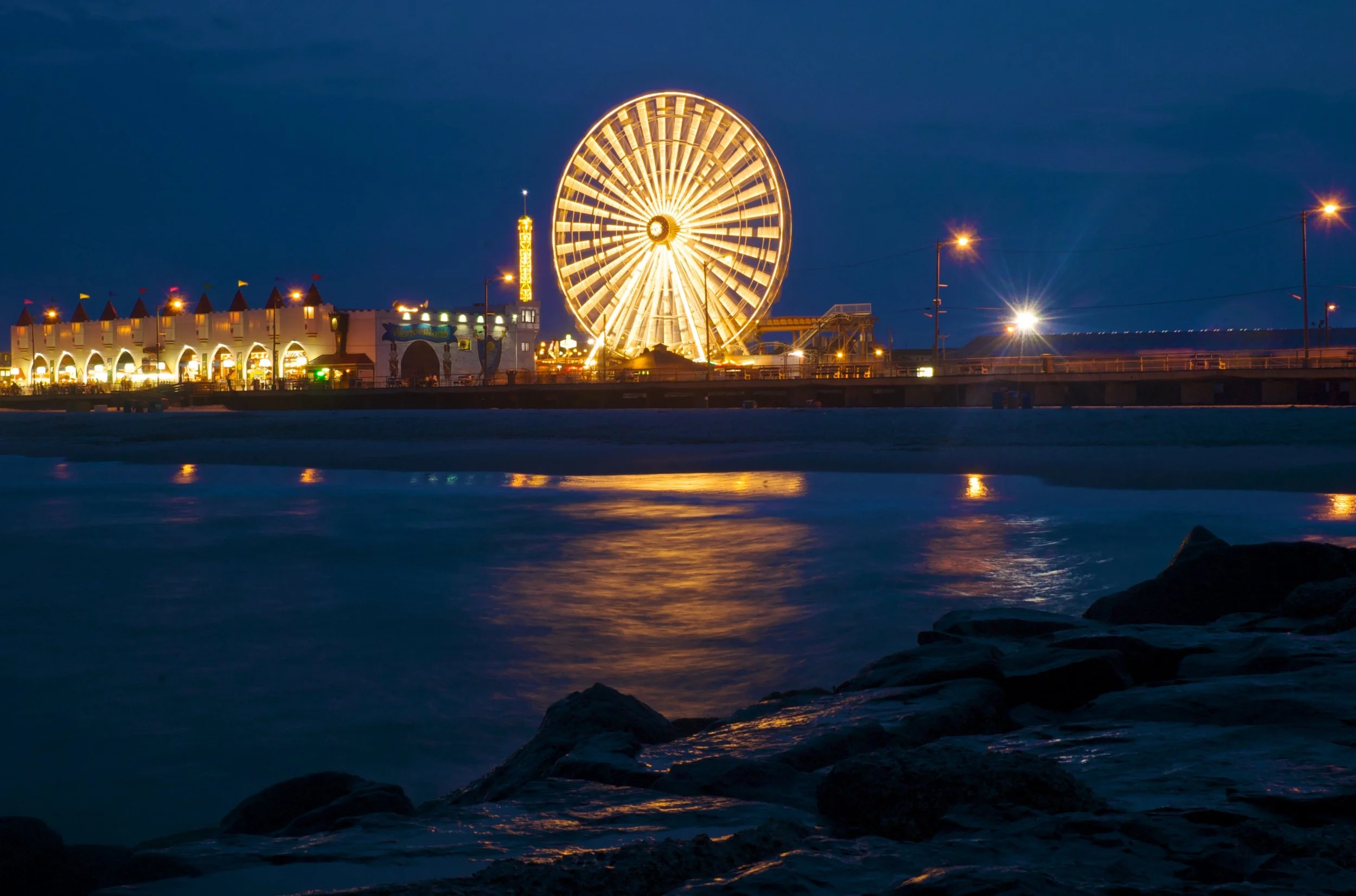
Ocean City at Night by John Craig 2008
A hotel at the Wonderland site fails to tap the real and reliable potential of our boardwalk, but encouraging the more than 350,000 regional residents to spend their days—and dollars—in Ocean City, does.
Those supporting the proposed 8 ½ story hotel at 600 Boardwalk claim that disrupting the character of our town is absolutely necessary to revitalizing Ocean City’s boardwalk.
We disagree. And so do the numbers.
More than 350,000 People Already Here (or Near Here) Don’t Need a Place to Stay—They Need a Place to Play
Ocean City’s population swells to 150,000 people in the summer. These are seasonal residents and weeklong vacationers who choose our beach town over others.
A boardwalk hotel is not a draw for these people; they are already here and have a place to stay, many of them within walking or biking distance of the boards. What they do want is something to entice them off their porches and up to the boardwalk more often.
And there are even more customers circling. More than 300,000 people live in nearby towns that don’t have all we have: a beach, a boardwalk, an evening worth driving to.
These are your day-visitors and your night-trippers. And they also don’t need a hotel. They need a reason to make the drive, for the day, or for the evening.
In short, a substantial number of potential customers are already here, across the bridge, or just a short drive away. We just need to give them a compelling reason to come to the Ocean City boardwalk in greater numbers.
The Right Next Step: A True Strategic Plan for the Boardwalk
For years, Ocean City has not had a comprehensive strategic plan for its boardwalk. Strange, it is a critical asset, the thing that differentiates us from some of the other beach towns we compete against for visitors. Yet we have not invested the time to create a comprehensive plan to guide the boardwalk into the future. We should.
It should focus on how to bring more foot traffic to the boardwalk. That is the lifeblood that feeds businesses. It should focus on building “experiences” for broad swaths of people—not narrow demographics and making Ocean City an even more coveted tourist destination. It should give people—the ones already here, the ones nearby, the ones who haven’t been in years—a reason to come, and keep coming back.
A 255-room hotel is not a substitute for that plan. It is a distraction from it.
A Real Plan Starts with Our Great Local Businesses
Our low-rise boardwalk is unique, beloved for its character and the mom-and-pop, family-owned businesses that line its length. They have created distinctive offerings, invested in their properties, and given people genuine reasons to seek them out. They deserve credit for that, and they are proof that quality draws foot traffic.
But they face economic challenges that make running a business a hard road to travel alone. Boardwalk merchants can individually invest in their properties (most do) and, as a group, they can look for opportunities to create more variety and offerings on the boardwalk.
But boardwalk property is expensive, and maintenance is costly as well. They deserve more support.
6 Things OC Can Do to Support Small Business Growth on the Boardwalk
Clarify the boardwalk zoning to create investment stability: Investors and businesses crave certainty. It allows for planning. It allows for making investment decisions, with a known set of rules. Right now, the boardwalk zoning is up for grabs. This is unhealthy. Those looking to invest in entertainment opportunities are sidelined by those speculating on higher profit uses. Indeed, this is exactly how the Wonderland bidding went down, as supposedly the only bidders for the parcel were condo developers, speculating on upzoning. Entertainment-oriented purchasers were priced out. The city needs to lay down concrete zoning rules that drive the boardwalk in the direction that safeguards our boardwalk character. If it wants entertainment in the front (and it should), then zone it for that—and that only that—so entertainment-oriented purchasers can compete. If they want mixed use along the back parcels to bring in new capital, they need to ensure it is done right, with clear rules.
Protect what has worked: It’s crucial for the city to protect local businesses and boardwalk character that has successfully drawn millions to the city each year. That does not mean stagnation, nor does it mean we can’t have new lodging. It means encouraging investment targeted toward what truly draws people to the city. The Boardwalk Subcommittee is charged with evaluating possible zoning changes. That evaluation needs to carefully think through the ways we can bring new investment capital to the boardwalk and the suitable options for mixed use. It needs to be done in a way that preserves the character of our town and boardwalk, not erode it: low-rise structures, maintaining a visible connection between the town and the boardwalk, and precise opening of parcels—just enough to bring in some fresh capital.
Consider a boardwalk improvement fund: The city should not give away upzoning. When a property owner receives an enhanced zoning designation, that owner profits from that redesignation. The city should also receive some of that benefit. It happens all the time in cities all over America. Owners who directly benefit from upzoning should have investment requirements for the entertainment portions of their parcels. Such owners could also contribute to a new boardwalk improvement fund, along with the city. The fund could then be used to equitably support boardwalk owners who do not benefit directly from mixed-use zoning by supplying funds to those businesses to also improve their locations.
Invest in more nightly entertainment: Give people a reason to come (and return again) to the boardwalk by offering different rotating programming that surprises and rewards people for showing up. Concerts, events, fun stuff—whatever form it takes, the goal is the same: Make the boardwalk feel alive in a way that changes from week to week. The city does a fair amount of this. It just needs to do more.
Open up the beach after dark: The decision to close the beach at night has cost more than people realize. The nighttime beach—the sound of the surf, the stars, the quiet—is one of the most emotionally resonant things this town offers. People used to walk down to the water after dinner, walk hand in hand, sit and remember. And then come back up to the boards, buy ice cream, stop in a shop, and end the evening the way evenings here are supposed to end. Closing the beach at night cut off a natural pipeline of foot traffic that fed the businesses. Restore it.
Make it less expensive to visit for the day: A trip to Ocean City adds up. Gas to get here. Parking. Beach fees for every member of the family. The cost can be over $150 before you put one toe in the sand. The city cannot control everything, but it can reduce the friction where it has authority to do so.
Start with beach fees. Ten dollars a person is a stiff charge for a single day for a family of four, especially when other beaches are free. A family is out $30, $40, or more dollars before they have parked, eaten, or bought a single thing on the boards. How can this be addressed? The city could reduce the daily rate for the beach in exchange for a modest increase in the seasonal and weekly fees — a shift that protects revenue while making casual visits more attractive. Day-trippers are often making a go/no-go decision based on exactly that daily number. And regular visitors and summer renters can absorb a small increase.
Parking is the second friction point. It is expensive, and for a family deciding whether to drive in for an evening, the cost can tip the balance. The city does not need to solve that entirely, but it can offer more options. Lower-cost remote lots. Shuttles that connect those lots to the boardwalk. The merchants have suggested allowing people to move cars between lots in a single day, without having to pay to park again. Simple, frequent, reliable, and flexible transportation that tells a day-tripper: You are welcome here and we have made it easy for you to stay a while.
Every dollar of friction the city removes at the front end is a dollar a visitor can spend on the boards once they arrive. And that drives better and more foot traffic for the merchants. These are investments, yes. But they are powerful investments that pay back in energy, foot traffic, and spending.
Let’s Get To Work
If the city cannot convert its captive summer residents and nearby neighbors into nightly boardwalk foot traffic, a taller building at the Wonderland site will not fix that. It will just give us a nicer view of the same problem.
We need to develop a comprehensive plan to get the people that are already here (or near here) up to our fabulous boardwalk. That’s where the payoff will be.
